Oilfield Enzyme Breaker Procurement Checklist
Selecting an enzyme breaker supplier for oilfield fluids is not just a purchasing exercise. The breaker has to fit the fluid system, temperature profile, pH range, salinity, additives, logistics plan, and commercial risk tolerance of the service company using it in the field.
FracTide Labs supplies enzyme breaker solutions for oilfield chemical teams that need controlled polymer cleanup, practical formulation guidance, and dependable supply support. This checklist is built for product managers, technical procurement teams, and formulation leads evaluating enzyme breakers for hydraulic fracturing fluid packages.
[request-a-quote id="quote-form" label="Request a quote"]
Start With the Fluid System, Not the Ingredient Name
A breaker that works well in one fracturing-fluid package may be poorly matched to another. Before comparing suppliers, define the base fluid system and the polymer architecture.
Confirm the target application
- Guar-based fracturing fluids
- Hydroxypropyl guar systems
- Carboxymethyl hydroxypropyl guar systems
- Linear gels
- Crosslinked gel systems
- Hybrid fluid packages where polymer cleanup still matters
- Low-temperature or moderate-temperature wells where enzyme behavior may be preferred over harsher chemical breakers
Clarify the procurement objective
Are you sourcing for:
- A direct replacement of an existing breaker?
- A new fluid package under development?
- A regional supply backup?
- A lower-residue cleanup profile?
- Improved timing control in a specific operating window?
- Private-label or custom-packaged supply?
FracTide Labs can support standard procurement evaluations as well as formulation-driven sourcing projects where breaker timing and additive compatibility need to be reviewed together.
Procurement Checklist for Enzyme Breakers
Use the following checkpoints before approving a supplier for qualification batches, field trials, or commercial supply.
1. Operating Window Fit
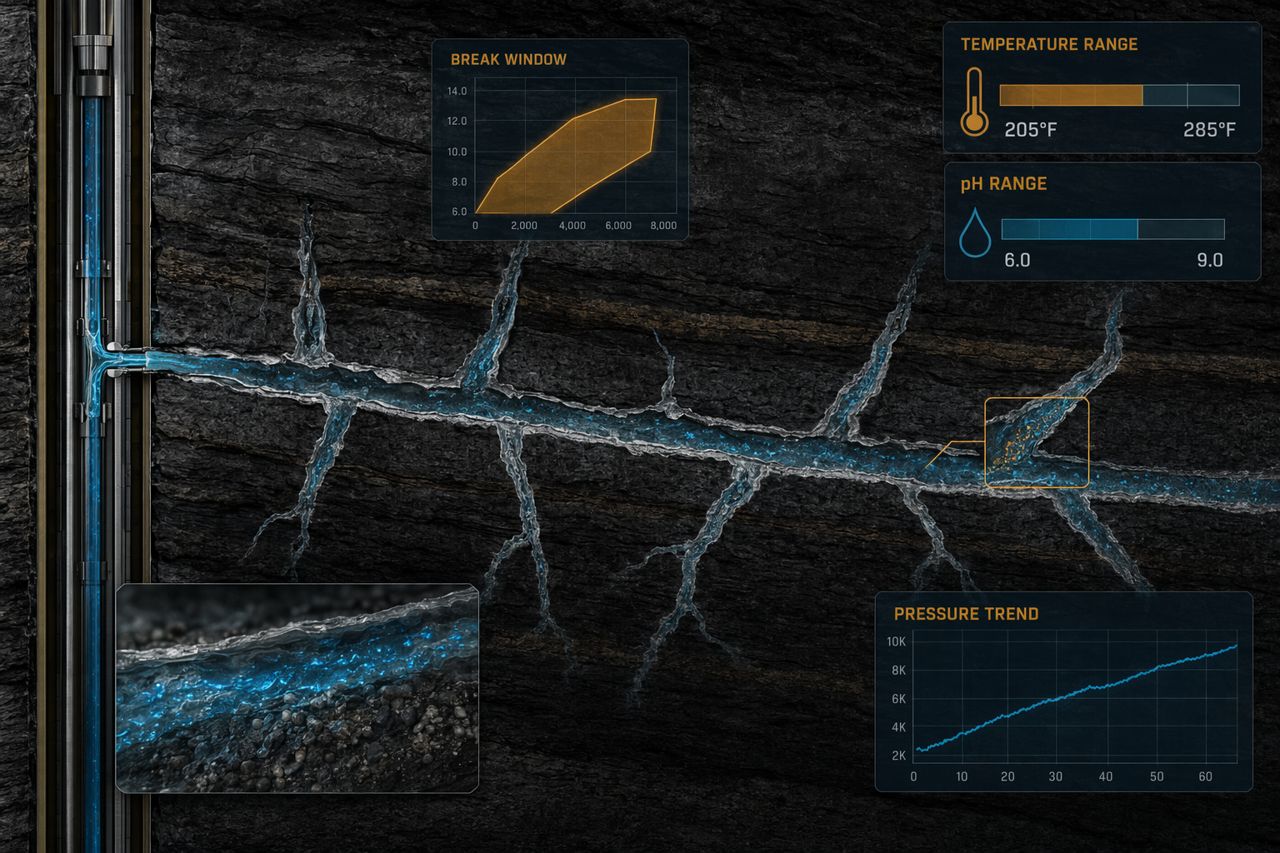
Request clear guidance on where the enzyme breaker is intended to perform. The supplier should be able to discuss the practical temperature and pH ranges for the product without forcing your team to interpret lab-only claims.
Evaluate:
- Bottomhole temperature range
- Surface hydration conditions
- Fluid pH before and after buffering
- Expected contact time
- Brine and produced-water considerations
- Sensitivity to aggressive oxidizers or incompatible additives
- Expected behavior during pumping, shut-in, and flowback windows
A technically useful supplier should tell you where the product fits and where it does not.
2. Breaker Timing Control
Breaker timing drives field value. Breaking too early can damage viscosity during placement. Breaking too late can delay cleanup and flowback performance.
Ask for support around:
- Early, intermediate, or delayed break profiles
- Timing adjustment through formulation approach
- Compatibility with encapsulated or dual-breaker strategies where applicable
- Gel viscosity reduction behavior under representative conditions
- Guidance for concentration screening without relying on generic recommendations
- Risks associated with over-treatment or under-treatment
FracTide Labs focuses on breaker selection that aligns with the service company’s desired fluid life, placement window, and cleanup expectations.
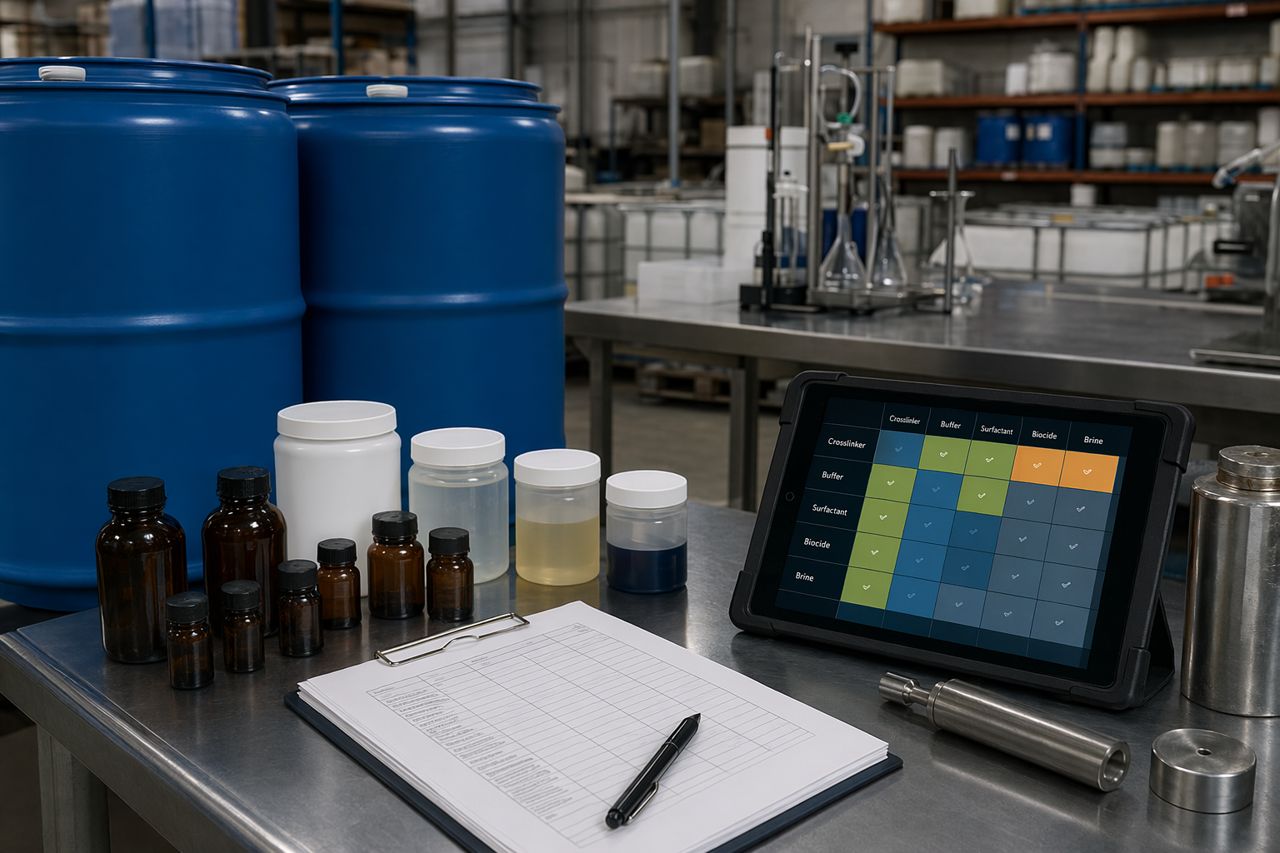
3. Compatibility With Common Fracturing-Fluid Additives
Enzyme breakers are formulation-sensitive. A product manager should evaluate the breaker inside the full additive package, not in isolation.
Review compatibility with:
- Crosslinkers
- Buffers
- Clay stabilizers
- Surfactants
- Friction reducers
- Biocides
- Scale inhibitors
- Corrosion inhibitors
- Oxygen scavengers
- Iron-control packages
- Brines and recycled-water streams
Some additives can reduce enzyme performance or shift breaker timing. FracTide Labs can help identify compatibility concerns early so your team can decide whether to reformulate, adjust sequencing, or select a different breaker profile.
4. Field-Relevant Validation Data
A supplier does not need to overpromise field outcomes to be useful. They do need to provide practical evidence that the breaker has been evaluated under conditions that resemble your intended use.
Request:
- Bench screening under representative temperature and pH conditions
- Viscosity-reduction curves or practical break-time observations
- Compatibility notes for common additive families
- Storage and handling guidance
- Sample availability for internal validation
- Lot-to-lot consistency documentation
- Technical support during trial planning
For procurement approval, your internal team should be able to connect the data package to a specific fluid design, region, and operating envelope.
5. Supply Reliability and Commercial Readiness
An enzyme breaker supplier for oilfield fluids must be commercially reliable, not just technically interesting.
Check:
- Production scale and batch planning
- Lead-time expectations
- Regional inventory strategy
- Packaging options
- Shelf-life guidance
- Temperature-controlled storage requirements, if any
- Documentation support for import, transport, and customer approvals
- Backup supply planning for seasonal demand spikes
- Ability to support pilot volumes and commercial volumes
FracTide Labs works with B2B buyers who need a supplier conversation that includes both formulation performance and procurement execution.
What to Ask Before Requesting a Sample
Before sample shipment, align internally on the conditions that matter. This prevents wasted screening time and helps the supplier recommend the right product variant.
Share these details with FracTide Labs
- Polymer type and loading range
- Linear or crosslinked system
- Target break window
- Expected temperature range
- pH range during hydration and downhole exposure
- Water source and salinity profile
- Additive package components
- Pump schedule assumptions
- Packaging preference
- Estimated monthly or project-based demand
- Target region for deployment
If details are confidential, provide ranges or representative conditions. The goal is to match the breaker to the operating envelope without exposing proprietary fluid design unnecessarily.
Red Flags When Evaluating Breaker Suppliers
Be cautious if a supplier cannot explain the commercial and technical limits of the product.
Common red flags include:
- One-size-fits-all claims across broad temperature and pH ranges
- No discussion of additive compatibility
- No practical guidance on breaker timing
- Limited batch documentation
- No clear storage or handling instructions
- Inability to support repeat supply
- Claims that ignore the difference between lab screening and field execution
- Recommendations made before the fluid system is understood
FracTide Labs favors controlled, application-specific recommendations over broad performance claims.
Where Enzyme Breakers Fit Best
Enzyme breakers are often considered when service companies need polymer degradation under controlled conditions and want an alternative or complement to harsher breaker chemistries.
They can be useful in programs where:
- Break timing needs to be tuned around a moderate operating window
- Polymer cleanup is a priority
- The fluid package is sensitive to early viscosity loss
- Additive compatibility can be confirmed during formulation work
- The buyer needs a supplier that can support both technical screening and recurring commercial demand
They may not be the best fit in every high-temperature, highly oxidative, or incompatible chemical environment. FracTide Labs can help identify those boundaries during the procurement review.
FracTide Labs Procurement Support
FracTide Labs supports oilfield chemical service companies with enzyme breaker supply and technical selection support for fracturing-fluid systems.
We can provide
- Product selection guidance based on your fluid system
- Operating-window discussion for temperature, pH, salinity, and contact time
- Compatibility review for common fracturing-fluid additives
- Sample support for internal evaluation
- Documentation for procurement and technical qualification
- Packaging and supply planning for pilot and commercial demand
- Quote support based on forecast volume, packaging, and delivery requirements
Our role is straightforward: help your team evaluate whether the breaker fits the formulation, the field window, and the supply plan.
Embedded Explainer Video
[faceless-explainer-video title="How to qualify an enzyme breaker supplier for oilfield fluids" duration="60 seconds" style="faceless technical animation with subtitles"]
This short explainer summarizes the procurement logic: define the fluid system, confirm the operating window, check additive compatibility, validate breaker timing, and align supply reliability before commercial approval.
Request a Quote
If you are qualifying an enzyme breaker for a fracturing-fluid system, send the operating window and procurement requirements through the on-site quote form. FracTide Labs will review the application details and respond with product-fit guidance, sample options, packaging availability, and commercial pricing.
[request-a-quote id="quote-form" label="Request a quote for enzyme breaker supply"]