Compatibility Questions Every Technical Sales Rep Should Ask Before Recommending a Breaker Package
When a customer asks for an enzyme breaker package, the fastest answer is rarely the best answer. Breaker performance depends on the complete fracturing-fluid system, not just the polymer name on the blend sheet.
For an oilfield chemical service company, the commercial risk is clear: recommend too aggressive a breaker and viscosity can fall before placement. Recommend too mild a breaker and the operator may see incomplete cleanup, elevated retained polymer, or post-job performance questions. The rep needs enough detail to match chemistry to the actual operating window.
FracTide Labs supports teams evaluating an enzyme breaker supplier for oilfield fluids with practical formulation guidance, compatibility screening, and supply programs built for field use.
The first question: what fluid system is actually being pumped?
Do not start with the breaker. Start with the fluid architecture.
Ask the customer:
- Is the base polymer guar, HPG, CMHPG, or another derivatized polysaccharide?
- Is the system linear, borate-crosslinked, zirconium-crosslinked, titanate-crosslinked, or hybrid?
- Is the job slickwater, linear gel, crosslinked gel, or a pad/flush sequence that changes chemistry during the stage?
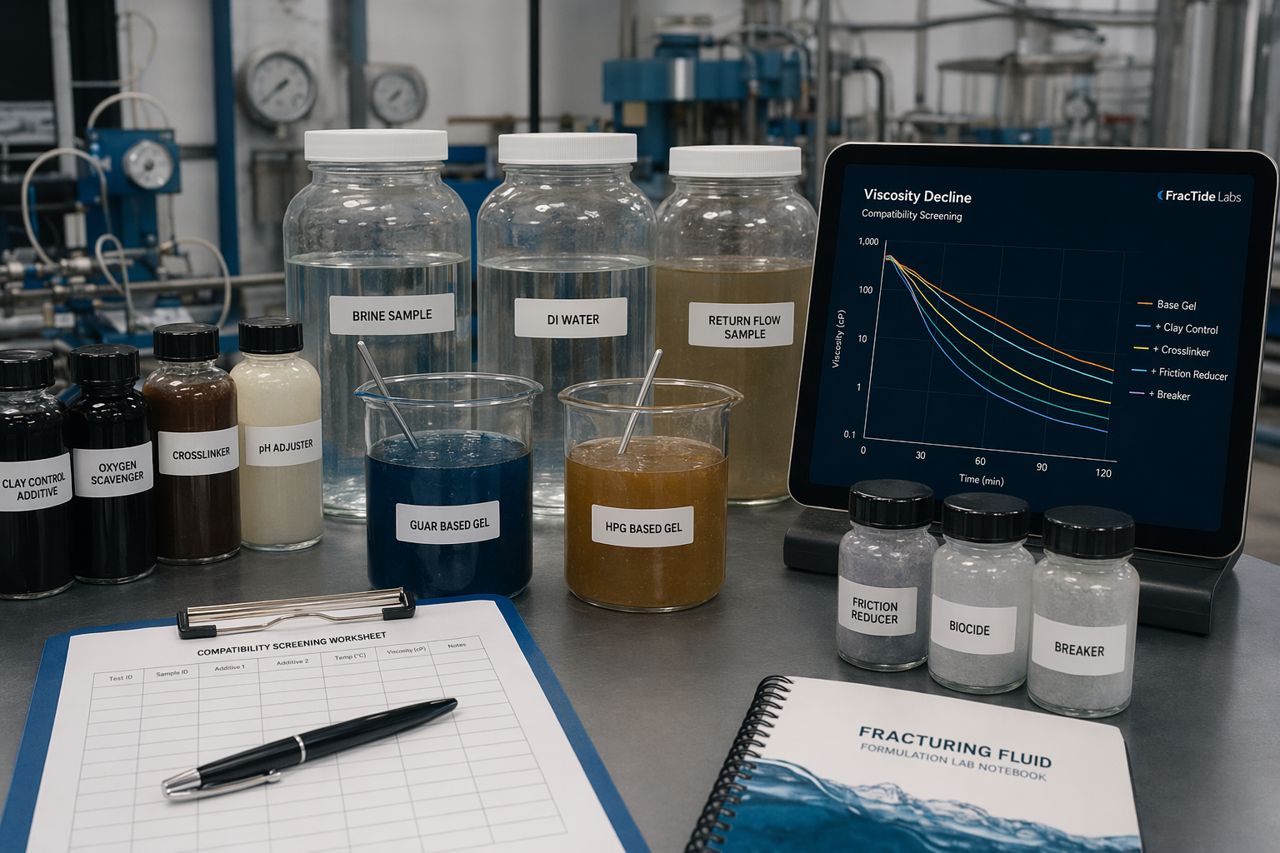
- Are friction reducers, surfactants, clay stabilizers, scale inhibitors, biocides, iron control agents, or corrosion inhibitors included?
- Is the breaker expected to work alone, or as part of a blend with oxidizer, delayed acid, encapsulated materials, or other cleanup aids?
A breaker package that looks acceptable in a clean lab gel may behave differently in a real service-company formulation. Sales reps should collect the full additive list before making timing or dosage recommendations.
Ask for the operating window, not just bottomhole temperature
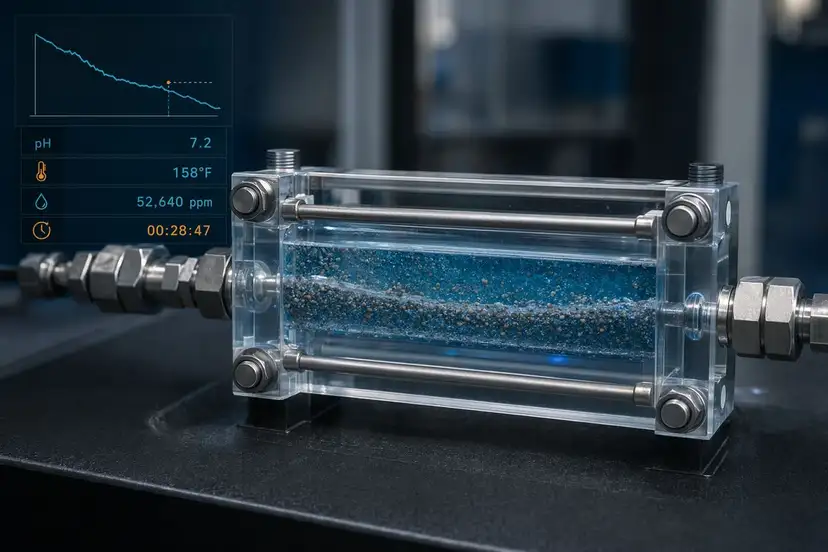
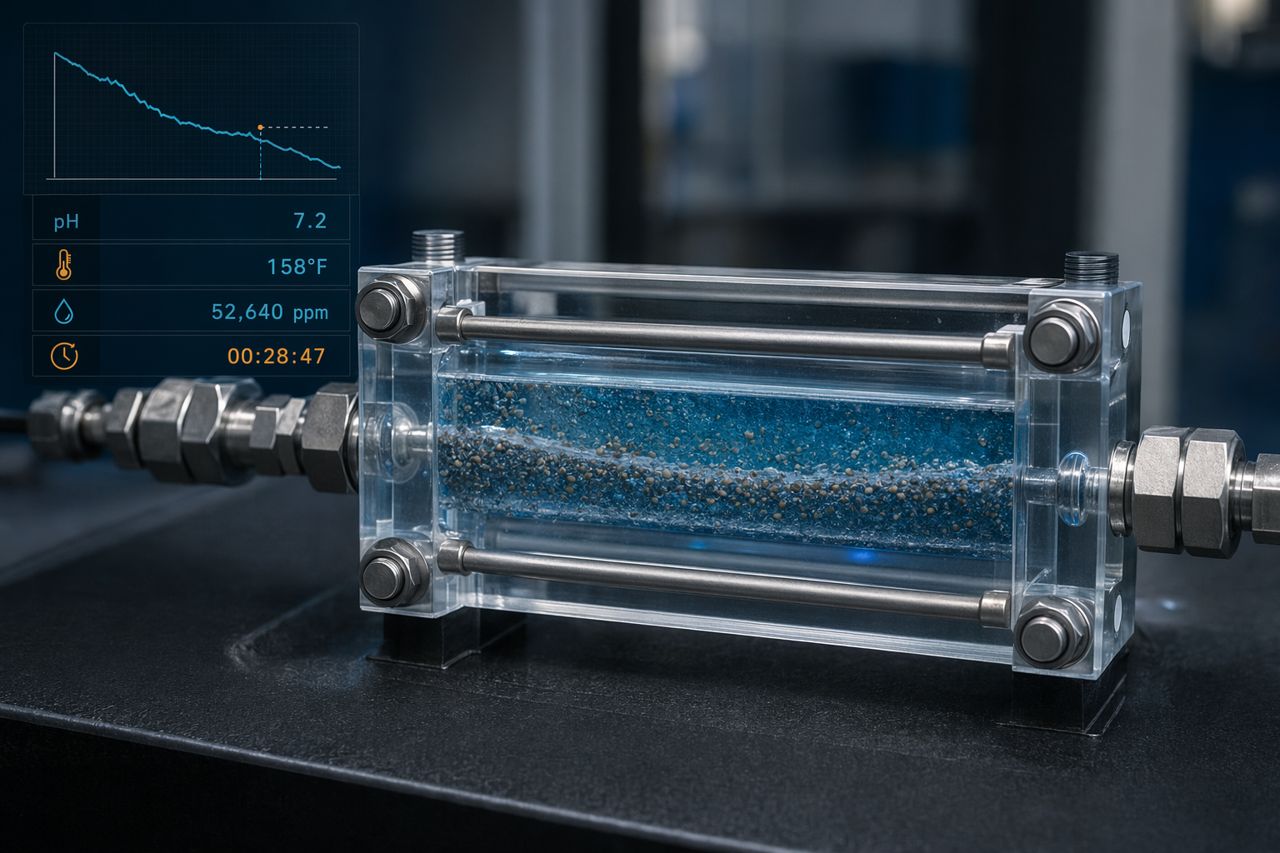
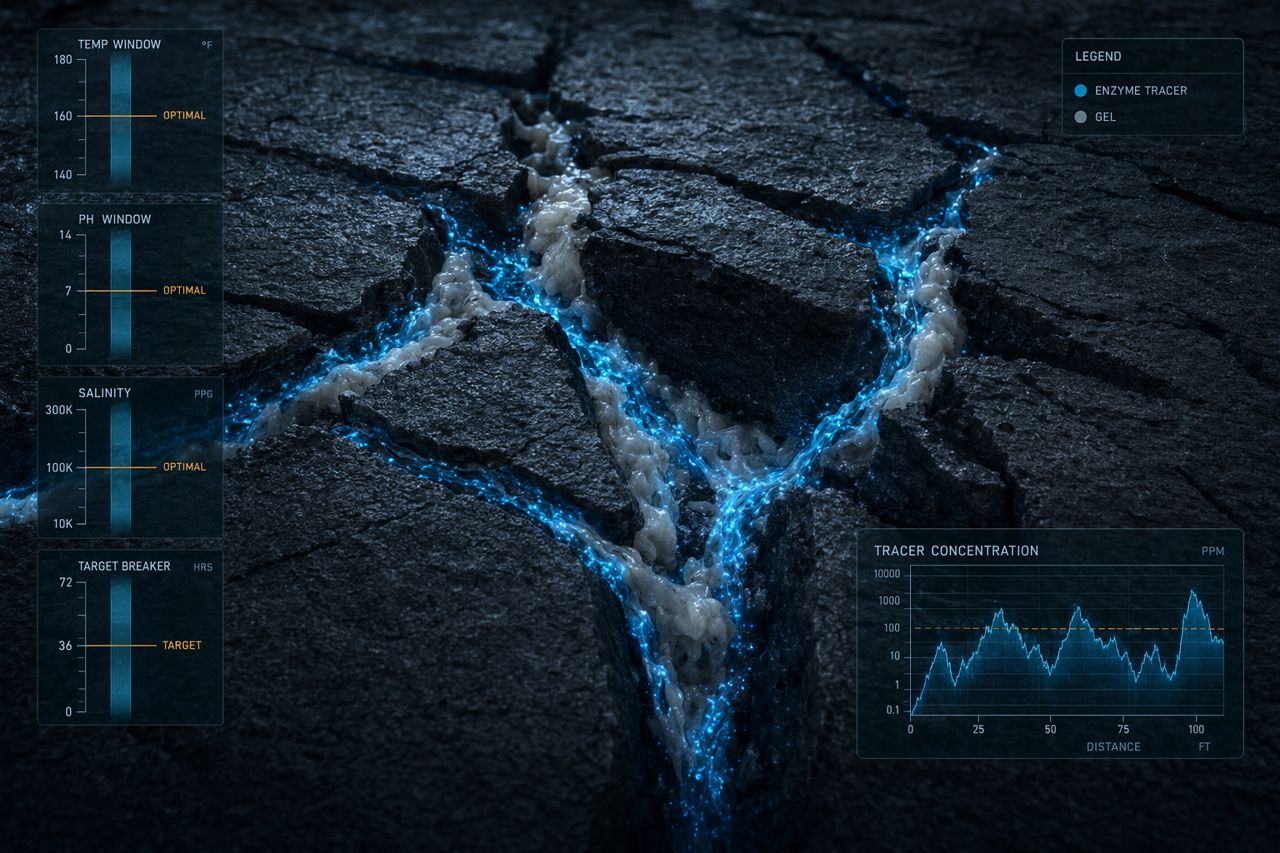
Temperature matters, but it is not the only control variable. Enzyme breaker behavior is shaped by exposure time, pH, salinity, shear history, and crosslink stability.
Capture these parameters early:
- Expected bottomhole temperature range
- Surface mix temperature and hydration time
- Pump time and planned shut-in time
- Fluid pH at hydration, crosslink, and downhole conditions
- Produced-water or brine salinity profile
- Hardness, iron, boron, and other ion contributors
- Expected pressure and shear environment
- Target break time at surface-equivalent and downhole conditions
The best question is not: will it break? The better question is: when should viscosity begin to decline, and under which chemistry window should that decline remain controlled?
Clarify the required breaker timing
Breaker timing is a design target. It should align with proppant transport, fracture placement, and cleanup objectives.
Ask:
- Does the customer need delayed break for proppant placement?
- Is early viscosity reduction acceptable after the fluid enters the fracture?
- Is the breaker intended for tail-in cleanup, full-stage viscosity reduction, or post-placement polymer reduction?
- What is the minimum viscosity profile the service team needs during pumping?
- What cleanup issue is the operator trying to solve: load recovery, retained polymer, conductivity damage risk, flowback viscosity, or residue?
A controlled enzyme breaker package should be selected around placement protection first, then cleanup performance.
Confirm compatibility with pH and crosslink chemistry
Many fracturing fluids are built around pH-sensitive crosslink behavior. The breaker must be compatible with that chemistry.
Key questions:
- What is the expected pH after buffer addition?
- Does pH drift during hydration or temperature exposure?
- Is the crosslinker borate-based or organometallic?
- Is the fluid designed for rapid crosslink, delayed crosslink, or high-temperature stability?
- Will any additive suppress or accelerate polymer cleavage?
For enzyme-based breakers, formulation fit matters. Some systems require a narrow pH window. Others need a package that tolerates higher salinity or delayed activation. Technical sales teams should avoid broad promises until compatibility data is generated on the actual fluid.
Do not skip water quality
Water is often the hidden variable in breaker complaints. Freshwater, recycled water, produced water, and blended brines can produce very different results.
Ask for:
- Water source and blend ratio
- Total dissolved solids trend
- Divalent ion content
- Iron content and oxidation state if available
- Biocide and oxidizer exposure history
- Field-mix variability between districts
A breaker program that works in one basin may need adjustment in another. If the customer changes water source mid-campaign, the breaker package should be rechecked.
Ask what success looks like to the buyer
Different buyers define breaker performance differently.
A product manager may care about shelf stability, blend cost, and private-label fit. A district engineer may care about reliable field mixing and fewer job-day exceptions. A completions customer may care about cleanup and conductivity protection. A procurement team may care about dependable lead times and documentation.
Before recommending a package, ask:
- Is the customer optimizing for cost-in-use, reliability, temperature range, or differentiated performance?
- Is this a standard catalog product, a custom blend, or a basin-specific program?
- Does the service company need liquid, dry, or formulated concentrate options?
- What packaging, labeling, and batch documentation are required?
- What validation data is needed before field rollout?
Technical sales improves when the recommendation matches the buyer's operational and commercial definition of success.
Build a minimum data pack before quoting
A useful quote should reflect the fluid, the job window, and the level of support required. Before sending a price, collect:
- Base polymer and loading range
- Crosslinker type and buffer package
- Additive list and sequence of addition
- Water source and salinity range
- Temperature and pH window
- Pump time, shut-in time, and desired break profile
- Preferred product format and packaging
- Expected monthly or campaign volume
- Required documentation and qualification steps
- Field trial plan, if applicable
This information allows the supplier to recommend a fit-for-purpose breaker package instead of a generic chemistry.
Common red flags before recommendation
Pause before quoting if you see any of these:
- The customer cannot confirm polymer type or crosslink chemistry
- Water source is changing frequently
- The package includes strong oxidizers or incompatible additives without compatibility data
- The target break time is shorter than the required proppant transport window
- The operating pH is outside the expected enzyme window
- The customer expects one breaker package to cover every basin and temperature range
- No lab validation is planned before field deployment
Red flags do not always stop a sale. They help define the testing plan and reduce field risk.
How FracTide Labs supports oilfield chemical teams
FracTide Labs supplies enzyme breaker options for fracturing-fluid applications where controlled polymer reduction, formulation compatibility, and supply reliability matter. We work with product managers, formulators, distributors, and service-company teams that need practical support before commercial rollout.
Our support can include:
- Breaker package selection for specific fracturing-fluid systems
- Compatibility review against common additives
- Temperature, pH, and salinity fit guidance
- Custom formulation discussion for private-label or basin-specific programs
- Batch documentation and supply planning
- Field-validation support with realistic operating assumptions
We do not recommend a breaker package from a single data point. We help define the operating window, confirm the formulation fit, and support the commercial path to adoption.
Quick sales-rep checklist
Before recommending a breaker package, ask:
- What polymer and crosslinker are being used?
- What pH, temperature, salinity, and pump-time window applies?
- What additives are present, and in what sequence?
- When should viscosity start to decline?
- What must the fluid still do before it breaks?
- What water source is used in the field?
- What product format, packaging, and lead time are required?
- What validation data does the buyer need to approve the package?
If those answers are clear, the recommendation can be technical, defensible, and commercially useful.
Request a quote
Need an enzyme breaker package for a specific fracturing-fluid system? Share the polymer, crosslinker, pH, temperature, salinity, target break timing, and expected volume through the on-site request form.
Request a quote