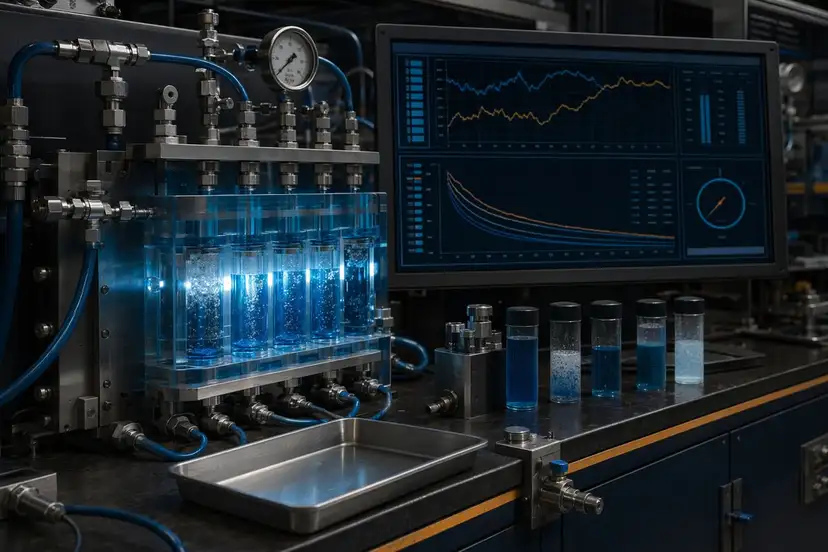
How Oilfield Labs Screen Fluid Cleanup Without Overbuilding the Test Plan
A practical screening framework for oilfield labs evaluating enzyme breaker fit, timing, and compatibility in fracturing-fluid cleanup programs.
Request pricing A practical screening framework for oilfield labs evaluating enzyme breaker fit, timing, and compatibility in fracturing-fluid cleanup programs.
Request pricingFor third-party labs, rheology equipment suppliers, and analytical service providers, fluid-cleanup screening often sits between two pressures: the operator wants practical field relevance, while the chemical supplier needs fast formulation decisions.
The risk is an overloaded test plan. Too many variables can slow decisions, increase lab cost, and still leave the product manager without a clear answer on breaker timing, fluid compatibility, or cleanup confidence.
For teams evaluating an enzyme breaker supplier for oilfield fluids, the goal is not to test everything. The goal is to screen the right things in the right order.
FracTide Labs supports oilfield chemical service companies with enzyme breaker inputs designed for formulation fit, controlled polymer reduction, and realistic operating windows. This article outlines a commercially useful screening approach for labs that need defensible answers without turning every request into a full development program.
A useful cleanup screen begins with the decision the customer needs to make.
Common decision points include:
These questions are more useful than a long menu of disconnected lab measurements. The screening plan should produce evidence that helps a product manager approve, reject, or refine a formulation.
A practical lab program usually works best in three tiers.
The first screen should confirm whether the enzyme breaker belongs in the candidate fluid system at all.
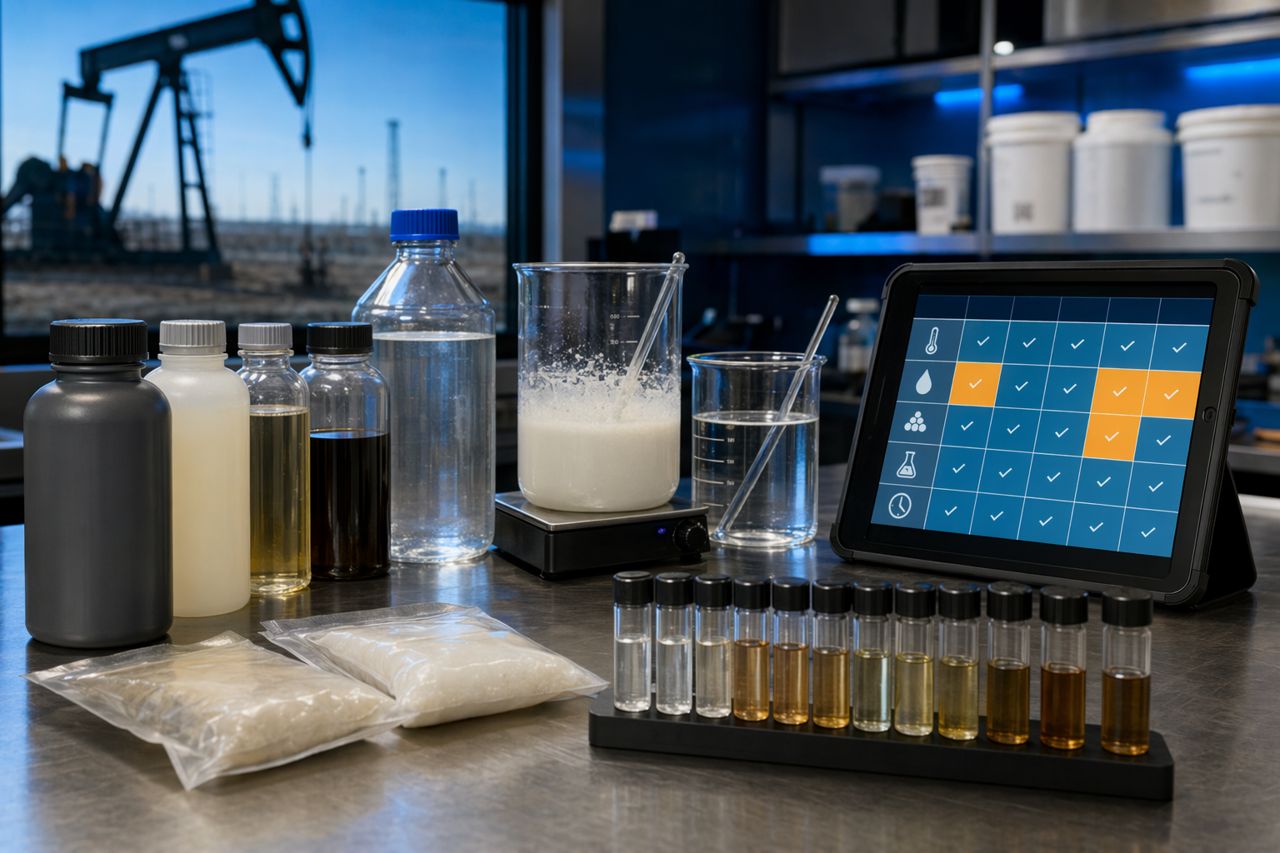
This tier typically compares the breaker against representative base fluids, polymer types, crosslinker packages, buffer systems, surfactants, clay-control additives, scale-control additives, and biocide packages where relevant.
The output should be simple: compatible, conditionally compatible, or not recommended.
At this stage, labs should avoid over-optimizing. The main question is whether the chemistry has a viable lane.
Once the breaker shows fit, the next screen should map the practical operating window.
Key variables usually include:
The objective is not to create a perfect universal model. It is to define where the breaker behaves predictably enough for field planning.
The final screen should connect lab behavior to field-use intent.
For enzyme breakers, timing matters. The formulation should preserve fluid function during handling and placement, then support controlled viscosity reduction after the fluid has done its job.
Useful outputs include comparative cleanup curves, retained viscosity windows, breaker-onset timing, and evidence of polymer reduction under relevant conditions. The best report is one that a product manager can turn into a formulation decision or customer recommendation.
Breaker timing is where many screening programs become either too thin or too complicated.
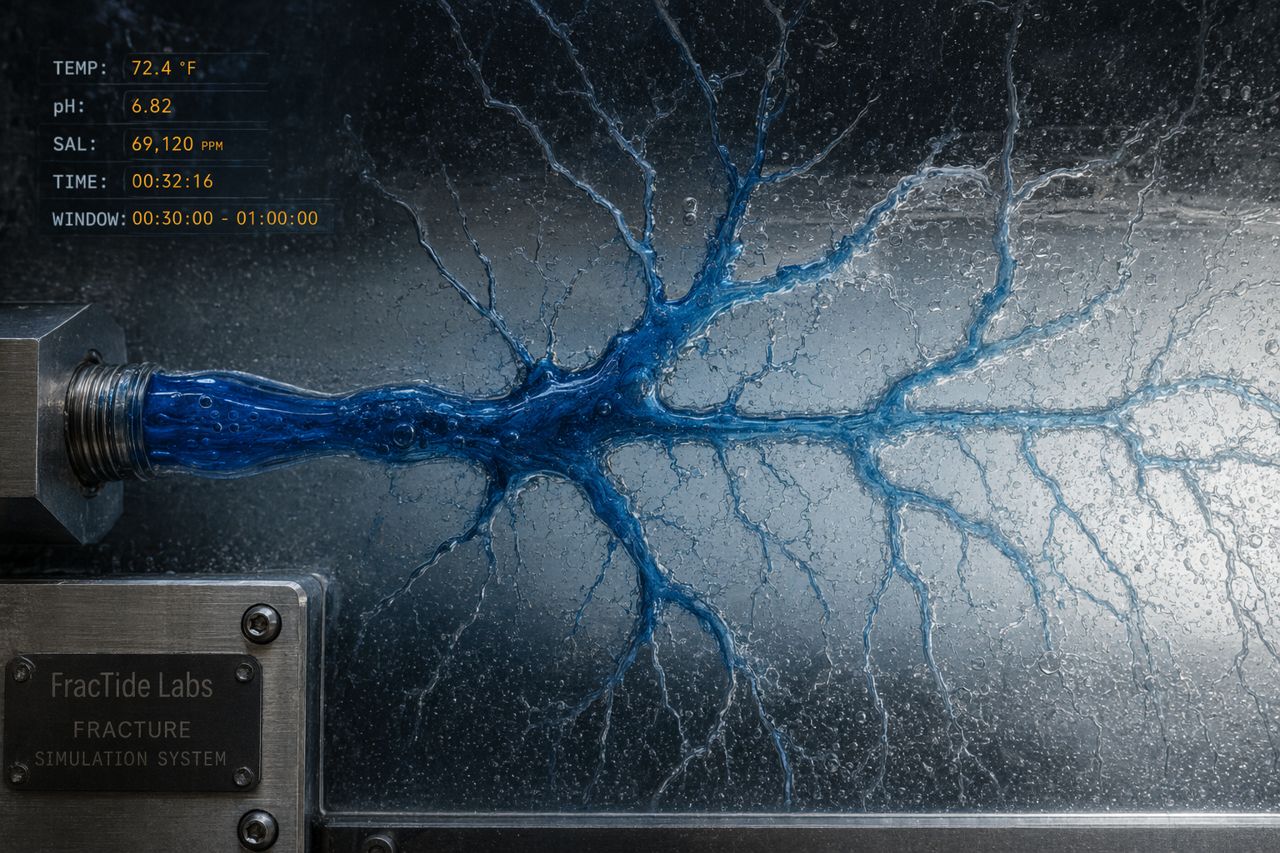
A single endpoint does not tell the full story. A breaker that looks effective at the end of a test may have reduced viscosity too early. Another breaker may preserve viscosity well but fail to support cleanup within the planned window.
A better screen tracks the shape of the transition:
This gives commercial teams a clearer answer: not just whether the breaker works, but whether it works on schedule.
Oilfield fluids are additive systems. Enzyme breakers must be evaluated in the presence of the chemistry they will actually meet.
Important compatibility categories include:
The point is not to test every possible additive combination upfront. The point is to identify the combinations most likely to affect breaker timing, enzyme stability, or cleanup consistency.
More test points can create the appearance of rigor while making the conclusion less usable.
A strong screening plan is narrow enough to finish quickly and broad enough to expose formulation risk.
Labs can often reduce unnecessary complexity by:
For chemical suppliers, speed matters. A product manager needs to know whether to proceed, adjust, or stop.
A supplier relationship should reduce screening uncertainty, not add to it.
Before beginning a cleanup evaluation, labs and service companies should request:
FracTide Labs focuses on practical formulation support for oilfield chemical suppliers. That means helping teams understand where an enzyme breaker is likely to fit, where it should be validated carefully, and where another breaker strategy may be more appropriate.
A lean starting matrix may include:
| Screen area | Purpose | Commercial decision supported |
|---|---|---|
| Base-fluid fit | Confirm compatibility with the target fluid family | Decide whether the breaker belongs in the formulation lane |
| Temperature window | Evaluate behavior across relevant downhole exposure | Identify suitable basin or service applications |
| pH window | Confirm performance under planned fluid conditions | Define buffer and formulation constraints |
| Brine tolerance | Check response to salinity and ion profile | Support water-source and basin planning |
| Additive compatibility | Identify interference or acceleration risks | Reduce field-mixing surprises |
| Timing profile | Track controlled transition from viscosity retention to cleanup | Match breaker behavior to pump schedule |
| Repeat confirmation | Verify consistency under the chosen condition set | Support product approval and customer confidence |
This approach keeps the program decision-focused while still reflecting the chemistry of real fracturing-fluid systems.
FracTide Labs supplies enzyme breaker solutions for oilfield fluid formulators that need controlled cleanup behavior, formulation compatibility, and reliable supply support.
We work with product managers, chemical service teams, and technical labs evaluating breaker fit in hydraulic fracturing fluid systems. Our role is to help narrow the formulation path with practical operating-window guidance and responsive commercial support.
We do not position enzyme breakers as a universal answer for every fluid or every well. The value is in matching the right breaker profile to the right system, then validating timing and compatibility under conditions that matter.
If your team is screening enzyme breakers for fracturing-fluid cleanup, FracTide Labs can support sample planning, commercial supply discussion, and formulation-fit guidance.
Tell us your application and volume — we reply with pricing and lead time.